
Haskell County Alert Systems
Texas no longer uses one unchanged VINELink route for every Haskell County custody question. The Texas Attorney General’s notification page directs county users to Texas IVSS-Counties. That system covers county-jail and court notification. A Haskell County detainee should be searched in that county channel while the person is still held. Registration is meant to produce a notice when the supplying agency reports a status change.
State custody is separate. The TDCJ IVSS portal serves people in Texas Department of Criminal Justice custody or on parole or mandatory supervision. Mandatory supervision is a state release under statutory conditions for the balance of a sentence. Ordinary county-court probation does not belong in TDCJ IVSS. The sentencing court and local Community Supervision and Corrections Department hold that probation trail.
Neither Texas service is a federal locator. A federal prison record belongs in the BOP locator, a federal pretrial record generally follows the court and U.S. Marshals Service, and an immigration-custody inquiry belongs in ICE’s locator or ERO channel. This split matters at Rolling Plains Detention Center, where people held in the same Haskell building may answer to different legal custodians.
Search Haskell County Notifications
Start with one known person, not a broad list. The county portal’s exact live field labels and its treatment of an old released result were not verified in the research, so do not assume every past record remains online. Use exact identity facts and compare any available booking data. A shared name is not enough to establish a match.
- Identify the custodian first. Use Texas IVSS-Counties for a Haskell County jail or court notice and TDCJ IVSS for state prison, parole, or mandatory supervision.
- Enter the person’s exact legal name and an agency identifier when the portal permits. Compare date of birth, booking facts, or a TDCJ number before selecting a record.
- Open only the matching record. Read the named agency, facility, custody status, and event type instead of relying on the search-result headline.
- If the person is still held, use the record’s registration path. Notification works best before the custody change occurs.
- If no record appears, call the Haskell County Sheriff’s Office at 940-864-2345 and request the jail-register entry and release or transfer sheet.
The broader Haskell County released-inmate search explains how to match the notification with the court case and the permanent jail record. A blank portal result can reflect a spelling issue, feed delay, transfer, old release, or the wrong custody system. It is not proof that the person was released.
Haskell County Alert Fields
A notification record is strongest when each field is read in context. Current IVSS-Counties labels were not confirmed from a live Haskell match, so no permanent “Released” field is promised here. The verified historical Texas VINE materials and current state guidance support the following practical field check.
| Field or event | What it can establish |
|---|---|
| Name or agency ID | Identifies the person within the supplying custody system; compare it with a second identity fact. |
| Custodian or facility | Names the agency or location tied to the notice, which may differ from the arresting agency. |
| In custody | Shows the supplying agency still reports custody, subject to its reporting lag. |
| Transfer | Shows movement to another custodian or site, not release to the community. |
| Release notice | Reports an agency status change that should be checked against the release sheet or TDCJ history. |
| Parole or supervision | In TDCJ IVSS, may show continuing state authority after prison departure. |
A scheduled or projected state-prison date is not an actual release event. TDCJ’s live inmate search covers only people currently incarcerated in TDCJ and updates on working days with at least a 24-hour delay. Record a projected or scheduled date before departure, then use TDCJ IVSS and an agency history request afterward.
Register Haskell County Release Alerts
Register only after confirming the correct person and system. The Attorney General says county phone and text notices continued after the provider change. Exact current buttons were not independently verified, so follow the live IVSS-Counties prompts rather than an old screenshot. Keep the saved confirmation and note which custodian supplies the data.
- Open the matching person record while custody is active and choose its notification or registration option.
- Select the contact methods the current portal offers and enter accurate phone, text, or account details.
- Complete any confirmation step shown by the current service. Migrated county users should reset their portal password at first login.
- Save the registration details. When an alert arrives, read whether it says release, transfer, escape, death, or another status change.
- Confirm a release with the Haskell County jail register, TDCJ record, or other named custodian before treating it as completed community release.
Notifications are designed for timely awareness, but they do not replace direct agency confirmation. A provider can receive late data, and Rolling Plains movement may merely change physical location. Contact the legal custodian shown in the record.
Note: Registration should occur while custody is active because an old released record may not remain searchable in the county portal.
Why Haskell VINELink Changed
Texas changed the county notification layer on September 1, 2025. Existing VINE registrations migrated to IVSS-Counties, and existing users were told to reset their passwords when first entering the new portal. Phone and text notices continued through the successor provider. That local transition is why an older instruction to “use VINELink” can point a Haskell County user to the wrong screen today.
The official transition notice shows the present county route. The captured source below documents that transition rather than depicting a private person’s record.
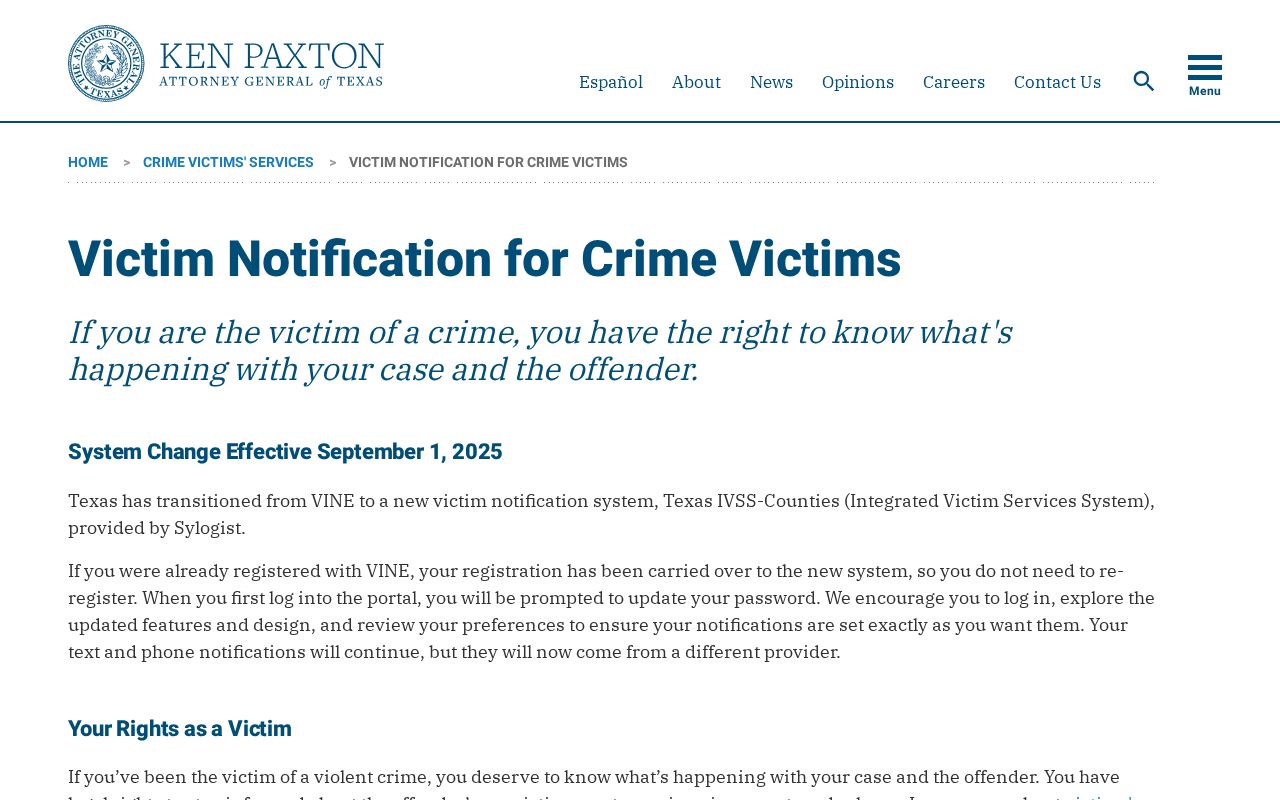
The image helps distinguish current county alerts from TDCJ IVSS, which remains a separate state-prison and parole service.
Historical Haskell VINE Workflow
The former official Texas VINE brochure documented a phone and web method that many users still recognize. A caller could use 877-894-8463 or VINELink, locate one person by name or identifier, and register phone numbers or email while custody was active. Telephone registration used a four-digit PIN. On an alert call, the recipient listened and entered that PIN followed by the pound sign to confirm receipt and stop repeat attempts.
Alerts historically included release, transfer, escape, and death, and registration was confidential. Those details explain old registrations and the familiar VINELink wording. They must not be presented as guaranteed labels in the new IVSS-Counties interface. Current county users should follow the successor portal, while migrated users complete its password-reset process.
- Release
- The reporting custodian says its custody ended; the release record confirms the completed event.
- Transfer
- The person moved to another agency or facility and may remain confined.
- Mandatory supervision
- A qualifying state release that keeps the person under TDCJ authority for the sentence balance.
- Discharge
- The end of the sentence or supervision term, distinct from release onto parole.
Confirm Haskell County Release Alerts
An alert is one part of the evidence. For a county detainee, request the Haskell County jail-register entry and the booking-out, release, or transfer sheet. Texas’ retention schedule makes the jail register permanent and includes the release or transfer date. Match that event with the court’s bond order, judgment, or other authority. The court can explain why release was allowed, while the jail record shows when the custodian acted.
For a state prisoner, the live TDCJ search may show projected, parole-review, and scheduled fields before release. After the person leaves prison, use TDCJ IVSS for continuing parole or mandatory supervision and request actual incarceration or discharge history from TDCJ. A county notification does not certify a TDCJ event.
Federal systems stay outside VINELink. The BOP locator can preserve a federal-prison release date and “RELEASED” status. ICE’s locator covers current detainees and people released from ICE custody within the preceding 60 days. A USMS pretrial prisoner generally requires the federal docket and a focused records request. Each result proves only the end or status of that agency’s custody.
Haskell Alert Records Fallback
When a Haskell County notification search fails, preserve the identity facts already gathered and switch to the record custodian. Ask the Sheriff for the permanent jail-register entry and the related booking-out or transfer sheet. The request should state the person’s full name, date of birth or booking number, approximate custody dates, and the exact fields needed. Ask whether the event was release to the community or transfer to another authority.
The court trail supplies a second check. Haskell’s District Clerk routes district felony records, while county-level misdemeanors may belong with the County Clerk. A bond order, judgment, dismissal, sentence, or revocation can explain the legal basis for movement. It does not by itself establish the time the person walked out, so match the cause number to the jail record.
For TDCJ, send a focused request for incarceration and actual release or discharge history. The published no-charge inmate-information email can return core information but does not provide photographs. The Office of General Counsel public-information route is available for a formal request. Include the seven-digit TDCJ number when known, or exact birth date and conviction county when it is not.
Keep the status terms precise. “In custody” describes a current report. “Projected” and “scheduled” describe future calculations or plans. “Transferred” means custody continued elsewhere. “Released” describes the end of the named agency’s custody, and “discharged” can describe the end of the sentence or supervision. This wording prevents an IVSS alert from being given more weight than its actual event type.
Public Record Search
Sponsored Results