
Haskell Probation Versus Parole
The Texas Board of Pardons and Paroles makes eligible state-prison release decisions. After release, TDCJ Parole Division supervises the person for the remaining sentence under parole or mandatory supervision. Probation, also called community supervision, is imposed by a trial court and administered through a Community Supervision and Corrections Department, or CSCD. TDCJ does not manage ordinary county-court probation.
| Point | Parole | Probation |
|---|---|---|
| Starting authority | Texas Board decision or mandatory-supervision law after TDCJ custody | Sentencing court order |
| Supervising body | TDCJ Parole Division | Local CSCD named through the court |
| Haskell verification | TDCJ record, IVSS, status line, and Abilene DPO | Judgment, clerk, and current CSCD referral |
| Custody history | State-prison release record | May follow jail or be ordered without prison |
| Ending record | TDCJ discharge or supervision-status record | Court or CSCD completion or discharge record |
- Parole
- Conditional release from state prison before the sentence fully expires.
- Mandatory supervision
- A statutory form of supervised state-prison release, subject to eligibility and exclusions.
- Probation
- Court-ordered community supervision administered locally.
- Discharge
- The recorded end of the relevant supervision authority.
- Absconder
- A supervised person alleged to have stopped reporting or whose location is unknown; the label does not itself prove revocation.
Verify Haskell Post-Release Supervision
Begin with identity and the source of the sentence. A shared name is not enough. Use a date of birth, TDCJ or SID number, cause number, conviction county, and approximate release date when available.
- Check the TDCJ inmate and parole-review record while the person is still incarcerated. Record identifiers, eligibility or review data, and any scheduled release fields.
- For an individual parole status, use the Texas Board of Pardons and Paroles Status Line at 844-512-0461. Eligibility or approval is not proof that release processing finished.
- After a state-prison release, check TDCJ IVSS for available custody or supervision status, then confirm the assigned route with the Abilene District Parole Office.
- For probation, obtain the sentencing judgment from the proper Haskell County court clerk. Ask which CSCD currently administers that order because no authoritative statewide public person-name probation search was verified.
- Match the supervision record to the actual county or TDCJ release record. Supervision confirms a later status, not the minute a person left custody.
The complete county release and transfer search path is available on the Haskell County released inmates page. That record remains important when a person moved between Haskell, TDCJ, ICE, or federal custody before supervision began.
Haskell Parole Review Decisions
Ordinary Texas parole review is mainly a file-review and sequential-vote process, not a public courtroom hearing. Parole Division identifies a person for review roughly six months before initial eligibility or four months before a later review. An Institutional Parole Officer prepares an interview and case summary. A three-member panel votes in sequence, and two matching votes produce the decision.
The Board status source supplies official status channels:
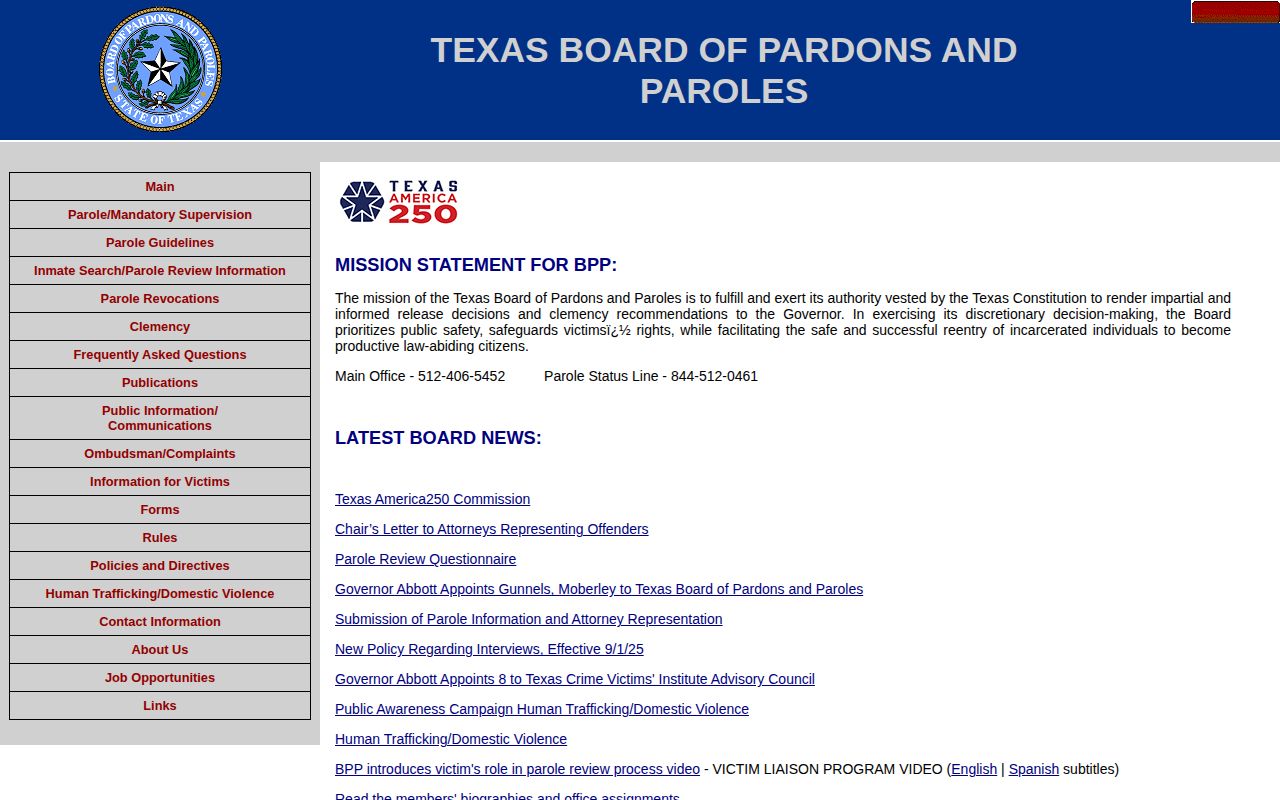
The Board page supports a person-specific status check. It is not a public statewide calendar of prospective votes or a released-person archive.
An approval can carry conditions or program requirements. A denial may set a later review date. Parole eligibility under Government Code §508.145 means consideration, not release, while §§508.147 through 508.149 govern mandatory supervision and exclusions. Actual departure still requires TDCJ scheduling and a completed release record.
Read Haskell Parole Vote Codes
The Board's vote codes convey more than a simple granted or denied label. FI-1 means approval for release when eligible. Other FI codes can require a program, treatment, or a set period before release. RMS indicates release to mandatory supervision. NR followed by a month and year means denial with a later review setting. SA is a denial without a regular later review when sentence expiration is comparatively near.
The official Board vote-options source shows the current decision framework:
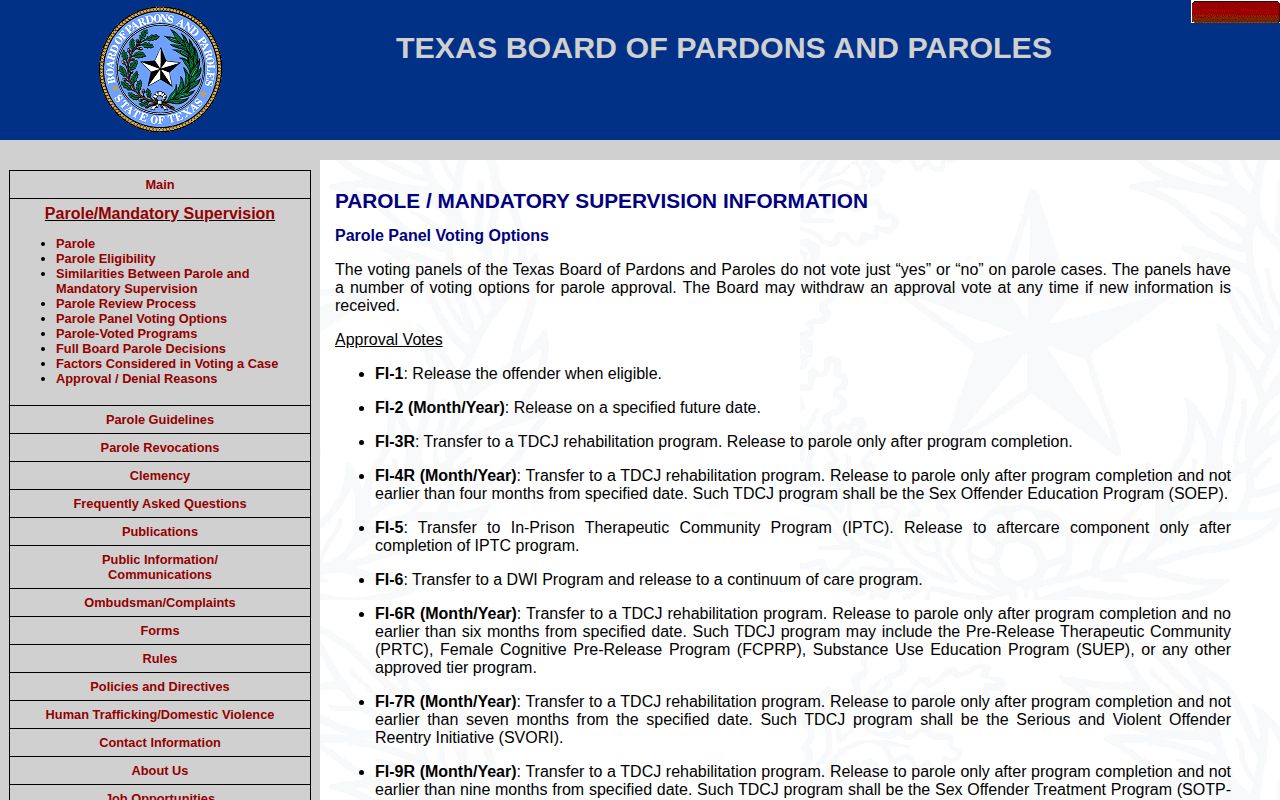
Read the exact code and any condition before drawing a conclusion. Even an approval code does not establish that the person has physically left TDCJ.
Haskell County Parole Office
The official TDCJ county directory assigns Haskell County to the Abilene District Parole Office in Region V. This office handles the state parole and mandatory-supervision route. It is not a jail and does not supervise ordinary local probation. TDCJ says officer or office contact information can be requested after release for a supervised client, while pre-release residence planning is confidential.
Abilene District Parole Office
5241 West Stamford Street
Abilene, TX 79603
Phone: 325-672-1495
Fax: 325-734-5188
Published public hours: not verified
The TDCJ county assignment directory documents the Haskell-to-Abilene route:
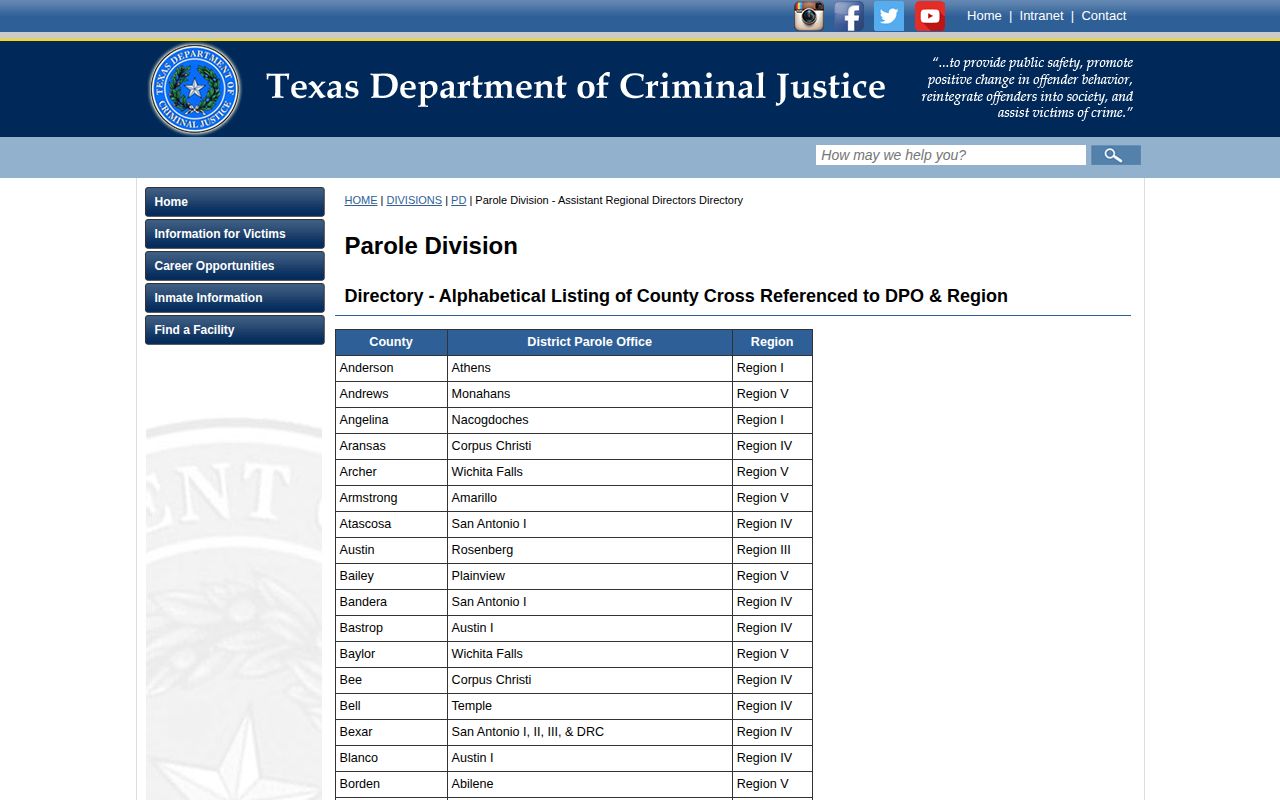
The directory establishes office assignment, not a person's private case conditions or current location.
Find Haskell Probation Records
No authoritative Texas database was verified for a public person-name probation search. Begin with the court judgment. District felony matters may route through the Haskell County District Clerk, while county-level misdemeanors may be held through the County Clerk and County Court. Justice or municipal matters have their own custodians. Ask the clerk that holds the cause to identify the current CSCD named for supervision.
A historical directory phone is weaker than a current court referral because staff and inter-county service arrangements can change. Request the judgment, order placing the person on community supervision, modifications, revocation filings, and completion or discharge document when public. A court order plus confirmation from the administering CSCD establishes probation. Neither source proves the physical jail exit time without the sheriff's release record.
Haskell Violations and Warrants
An alleged parole violation does not erase the original release. Depending on the posture, TDCJ describes preliminary, revocation, and mitigation hearings. A three-member panel may continue supervision, change conditions, impose an intermediate placement, revoke parole and return the person, or permit discharge when appropriate. TDCJ says a revocation decision generally takes two to four weeks after the hearing and is delivered to the releasee.
Parole warrants are generally entered into NCIC and TCIC, law-enforcement systems that are not public name-search databases. No official statewide public parole-absconder search was found. Do not treat a missing IVSS record, a rumor, or failure to reach someone as proof of a warrant. Contact the supervising office for the proper reporting route, or use the relevant court and law-enforcement record when a public filing exists.
Absconder, warrant, arrest, and revocation are different stages. Only the responsible agency record establishes which stage applies.
Haskell Supervision Status Notices
TDCJ IVSS is the relevant state-prison and parole notification system. It can help bridge the period after a person leaves TDCJ incarceration but remains on parole or mandatory supervision. Texas IVSS-Counties is a separate county custody-notification system that replaced the former county VINE provider on September 1, 2025. The two portals should not be merged.
A notice may report a custody or status change, but the underlying release, transfer, court, or supervision record provides stronger confirmation. The Texas sex-offender registry is also not a parole or probation lookup. It applies only when registration law covers the person and cannot prove the exact date or terms of release.
Request Haskell Parole Hearing Records
Revocation hearings occur after release when a violation is alleged. They are distinct from the Board's ordinary pre-release file review. The Board publishes process information but no public person-by-person hearing calendar was verified. A hearing setting, when one exists, should not be treated as proof that parole was revoked or that a person returned to custody.
The releasee receives the decision through the official process. A recording may be requested from the TDCJ Parole Division Central File Coordination Unit, Open Records Section, at 8712 Shoal Creek Boulevard, Austin, TX 78757. The published phone is 512-465-5102 and fax is 512-406-5930. TDCJ notes that processing and shipping charges may apply, but the research does not establish one fixed amount. Ask for the decision, recording, or publicly releasable case material by name, identifier, hearing date, and office.
Haskell Release Property Corrections
A supervision question can expose a separate dispute about what happened at release. Texas retention schedule PS4200-12 covers prisoner property inventories and receipts, including return of non-confiscated property, for at least two years after release or transfer. A released person can request that receipt separately from the release sheet. The parole office is not automatically the custodian of county-jail property records.
For a factual error in a release or supervision record, send the responsible custodian the matching court order, identity documents, or other official proof. A correction by the Sheriff does not automatically revise the court, TDCJ, IVSS, or copies held elsewhere. Each agency controls its own record and correction route. This distinction prevents a property issue from being mistaken for a change in parole or probation status.
Haskell Supervision Discharge Records
Parole supervision can end through completion or discharge, while a violation can lead to changed conditions, intermediate placement, or revocation. Probation ends according to the court order and CSCD record, which may reflect completion, early termination, extension, modification, or revocation. The precise outcome should come from the agency or court that had authority.
Ask TDCJ for the supervision-status or discharge history for state parole. For probation, obtain the final court order and CSCD confirmation. A discharge means the relevant supervision authority ended; it does not erase the conviction or custody history. Expunction and nondisclosure are separate court-controlled remedies under Texas law and should never be inferred from a blank search result.